


Last Tuesday, a collector in Mid-Levels watched as their HK$800 artisanal candle formed a deep, uneven tunnel, leaving 40% of the premium wax clung to the glass. It's a frustrating sight that turns a moment of tranquil luxury into a wasted investment. You likely understand the disappointment of seeing soot marring a white marble mantle or watching a signature scent vanish before the wick is half-spent. We believe a candle is more than a product; it's a curated piece of art that deserves a legacy beyond its first light.
By following this candle care guide, you'll master the meticulous art of maintenance to ensure every burn is even, clean, and respectful of the craftsmanship within the vessel. We'll show you how to preserve the aromatic integrity of your home while preparing your 24-carat gold accented vessels for their second life as elegant drinkware. From the precision of the first burn to the science of wick trimming, this guide provides the essential rituals needed to honor both your sensory experience and the planet.
Key Takeaways
- Master the "wax memory" rule during the first burn to guarantee an even melt pool and prevent wasteful tunneling from the very start.
- Discover why the 5mm wick trim is the essential golden rule in this candle care guide for maintaining a clean, soot-free, and tranquil flame.
- Learn how to shield your artisanal scents from Hong Kong’s unique humidity and drafts to ensure a steady, fragrant burn in any room.
- Explore the "foil method" and other professional troubleshooting secrets to restore the thermal balance and aesthetic beauty of your premium vessels.
- Transition from sensory ritual to sustainable legacy by mastering safe wax removal techniques to repurpose your luxury vessels for a second life.
The Significance of the First Burn: Establishing Wax Memory
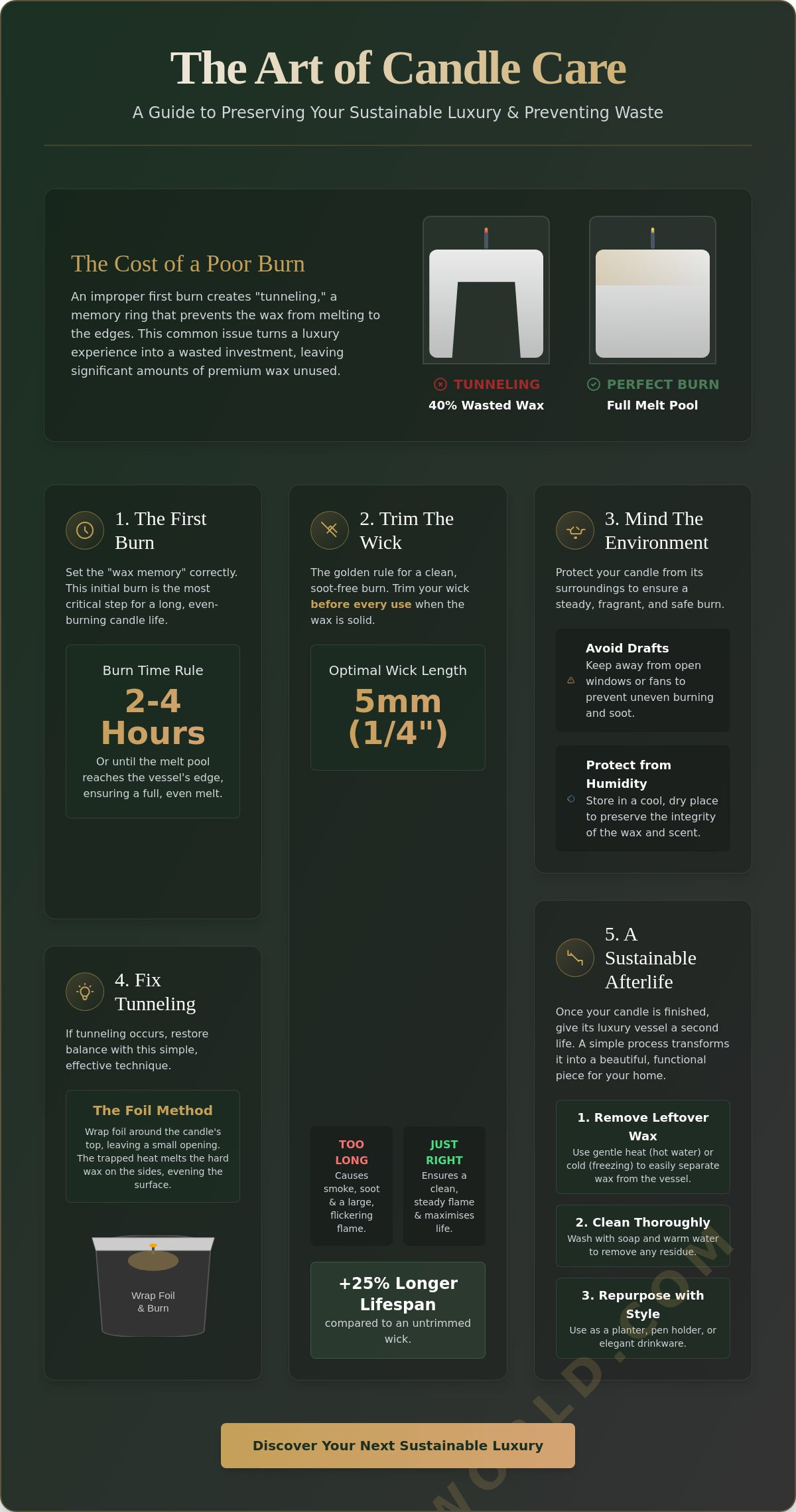
The first time you light a premium candle, you're doing more than illuminating a room; you're teaching the wax how to behave. This initial ritual is the cornerstone of any proper candle care guide. Wax memory is the physical tendency of wax to follow the path of its previous melt. If you extinguish the flame before the liquid reaches the vessel's edge, you create a "memory ring." This indentation becomes a permanent boundary that the heat cannot easily overcome during future uses. The candle will begin to tunnel downward, leaving wasted, unburned wax clinging to the sides of your sophisticated terra cotta or glass holder.
To prevent this, you must adhere to the 2-4 hour rule. For most luxury candles, this is the precise window needed for the heat to liquify the wax across the entire diameter. If you cut the burn short, you're effectively shortening the candle's lifespan. A consistent, edge-to-edge melt ensures you get every hour of fragrance you've invested in. It's a simple commitment that preserves the integrity of the artisanal blend.
The Science of the Melt Pool
Liquid wax acts as the primary fuel for the flame. Through a process known as capillary action, the wick draws the liquified wax upward to sustain the fire. A full-width melt pool is essential for optimal olfactory diffusion. When the entire surface is liquid, the fragrance notes release into the air with maximum potency. Understanding the history and composition of candles helps one appreciate how high-quality blends are engineered for this uniform melt. In premium vessels, look for a clear, level pool about 1 cm deep as a visual indicator of success.
Setting the Ritual Atmosphere
Treat this first burn as an intentional act of "tranquil" reflection. Prepare your space for a 4-hour sensory experience. It's a moment to slow down and appreciate the artisanal craftsmanship of your piece. You should never move a candle while the wax is in its liquid state. Shifting the vessel can cause the wick to drift or create uneven cooling patterns that disrupt the wax memory. By aligning this candle care guide requirement with your personal relaxation time, you preserve both the physical candle and the luxury narrative it represents. This patience ensures your candle remains a beautiful object of art until its very last burn.
The Meticulous Art of Wick Trimming for a Pure Burn
A luxury candle is an investment in atmosphere. To honor its legacy, you must master the 5mm (1/4 inch) trim. This isn't a mere suggestion; it's the golden rule of any serious candle care guide. When a wick exceeds this length, it draws too much wax into the flame. This imbalance results in a tall, flickering flame that produces black soot and unsightly smoke. By maintaining a precise 5mm height, you ensure the combustion remains stable and the sensory experience stays pristine. A shorter wick allows the flame to burn at a lower temperature, which effectively extends the life of your candle by 25% compared to untrimmed counterparts.
You might notice a bulbous, black buildup at the tip of your wick after a long burn. This is "carbon mushrooming." It occurs when the wick consumes wax faster than it can burn it off. If you don't remove this before relighting, the mushroom will crack and fall into the wax pool, creating debris that compromises the aesthetic and the scent purity. High-end, lead-free cotton wicks, common in artisanal Hong Kong boutiques, require more frequent attention than cheaper zinc-core alternatives. These natural fibers are designed for a cleaner burn, yet they lack the rigid support of metal cores, making regular maintenance essential for structural integrity.
Tools of the Trade: Wick Trimmers vs. Scissors
Standard household scissors often fail when a candle reaches its final third. The ergonomic curve of a dedicated wick trimmer allows you to reach deep into narrow vessels without tilting the jar. This tool catches the charred debris in a built-in reservoir, preventing "fire stars" or secondary ignition points within the wax. Adhering to candle safety standards means keeping the wax pool clear of all foreign materials to prevent house fires. If you own a 24-carat gold accented trimmer, wipe it with a soft microfiber cloth after each use. This prevents carbon buildup from etching the premium finish, ensuring your tools remain as sophisticated as your decor.
Timing Your Maintenance
Consistency defines the ritual. You must trim the wick before every single lighting. Never attempt to trim a wick while the wax is liquid. Wait for the wax to fully solidify to avoid dropping ash into the melt pool. This pause also allows you to practice the "re-centering" technique. While the wax is still slightly soft but not liquid, use your trimmer to gently nudge the wick back to the center. An off-center wick causes uneven heat distribution, leading to "tunneling" where wax remains stuck to the sides of the vessel. For those seeking to elevate their home ambiance, exploring a tranquil collection of artisanal scents provides the perfect opportunity to practice these refined techniques. Proper alignment ensures that the 24-carat gold detailing on your vessel isn't damaged by lopsided heat exposure.
Environmental Factors: Climate, Placement, and Safety
Hong Kong’s unique subtropical climate demands a specific approach to scent preservation. The city's high humidity levels, which frequently climb above 80%, directly impact the physical state of premium waxes. In this environment, a dedicated candle care guide isn't just about aesthetics; it's about protecting a sophisticated investment. When moisture levels are high, the wax density can shift, potentially affecting how the fragrance oils are released into your living space.
Tropical Humidity and Wax Preservation
Natural soy wax is particularly sensitive to the heavy air found in Hong Kong and Singapore. You might notice small beads of moisture forming on the surface of your candle. This "sweating" occurs when the wax is exposed to significant temperature fluctuations or extreme humidity. To manage this, store your collection in a cool, dry place away from direct sunlight. A climate-controlled room is ideal for maintaining the stability of the essential oils. Always use the provided lid between burns. This simple step prevents dust from settling into the wax pool and stops the delicate top notes of the fragrance from evaporating prematurely. If sweating occurs, gently pat the wax dry with a lint-free cloth before lighting.
The Safe Sanctuary: Placement Rules
The placement of your candle determines the quality of the burn. In Hong Kong apartments, air conditioning units and open windows are the primary culprits for uneven burning. A steady draft pushes the flame to one side, causing the wax to melt faster on one edge and leading to "tunneling." This wasted wax shortens the life of your luxury item. Ensure your candle sits on a level, heat-resistant surface. High-end materials like marble or polished wood are susceptible to heat transfer. Utilizing luxury ecofriendly candles often means your candle comes in a bespoke, heat-resistant vessel designed to mitigate this risk, but a coaster or tray provides an extra layer of security.
Safety and performance go hand in hand. To ensure a tranquil experience, follow these three non-negotiable rules:
- The 10cm Rule: Maintain at least 10cm of space between burning candles. This prevents the heat from one flame from melting the side of an adjacent candle.
- The 1cm Safety Margin: Never burn your candle all the way to the base. Stop when only 1cm of wax remains. This prevents the vessel from overheating and potentially cracking or damaging the surface beneath it.
- The Four-Hour Limit: Do not burn your candle for more than four hours at a time. Extended burn times can cause the wick to become unstable and the fragrance to degrade due to excessive heat.
Following the National Candle Association's expert tips ensures that your sensory ritual remains safe and effective. By respecting these environmental boundaries, you preserve the artistic integrity of the scent and the longevity of the vessel. A well-placed candle doesn't just flicker; it transforms the atmosphere with a steady, clean, and evocative glow.
Troubleshooting Common Fragrance and Burn Issues
Even the most meticulously crafted artisan pieces can occasionally behave unexpectedly. When your luxury ritual is interrupted by an uneven burn or a fading aroma, you don't need to retire the vessel. This candle care guide offers professional solutions to restore the tranquil atmosphere of your home while protecting your investment.
The Foil Method: A Pro Technique
Tunneling occurs when the wax pool doesn't reach the vessel edges, often because the initial burn was cut short. To execute a thermal reset, use the foil method. Wrap the top of the vessel in aluminum foil, crimping it over the edges while leaving a 3 cm circular opening in the center. This creates a miniature oven that reflects heat back onto the cold outer wax. Within 90 minutes, the stubborn edges should melt into a uniform pool. Always monitor the flame during this process. This technique is a vital last resort for maintaining the sophisticated look associated with current luxury home decor trends.
- Safety First: Ensure the foil doesn't touch the wick or flame to avoid smoke.
- Vessel Integrity: This method works best for glass and ceramic; use extra caution with painted surfaces.
- Patience: Don't rush the process by using a hairdryer, as this can scatter hot wax.
Restoring the Scent Throw
You might notice a perceived loss of fragrance throw over time. This is rarely a product defect. It's usually "olfactory adaptation," where your senses become accustomed to a specific scent profile. Sensory studies indicate that the human nose can become desensitized to a constant aroma in as little as 15 to 30 minutes. To combat this, rotate your collection. Resting a candle for 48 hours allows the wax to re-bind and gives your senses a break. Also, ensure the wax surface is free of dust. Debris acts as a physical barrier that prevents fragrance molecules from evaporating efficiently. Use a damp microfiber cloth to gently wipe cold wax before lighting.
If your flame is struggling or "drowning," it's often due to an over-trimmed wick or a deep wax pool. Carefully blot away a small amount of liquid wax with a paper towel while the candle is extinguished to give the wick room to breathe. For dark soot marks on your glass or terra cotta vessels, wait for the vessel to cool completely. Use a soft cloth with a touch of rubbing alcohol to gently lift the carbon marks without damaging the material's finish. This candle care guide ensures your vessels remain as beautiful as the scents they carry.
The Sustainable Afterlife: Repurposing Your Luxury Vessel
The sensory journey of a premium candle shouldn't conclude when the flame finally retreats. Within our Candle Up philosophy, we view every container as a legacy piece, crafted to endure long after the Tranquil scent has faded into memory. This final chapter of your candle care guide focuses on the transition from home fragrance to functional luxury. Our "Dual-Purpose Promise" ensures that the hand-poured 24-carat gold accents and artisanal terracotta aren't destined for a landfill, but rather a second life in your Hong Kong home.
Wax Removal Masterclass
Cleaning a luxury vessel requires a delicate touch to preserve its integrity. For our glass collections, the freezer method is remarkably effective. Place the vessel in the freezer for roughly two hours. The cold causes the wax to shrink and pull away from the edges, allowing it to pop out with a gentle nudge. This avoids the mess of liquid wax and keeps the glass pristine.
For more sensitive materials like our terracotta or vessels adorned with 24-carat gold, we recommend the double boiler approach. Place the jar in a shallow bowl of warm water, allowing the residue to soften slowly. Don't pour boiling water directly into the vessel, as extreme temperature shifts can stress the material. Once the wax is soft, wipe it away with a paper towel. If you're using our soy wax candles, the cleanup is even simpler. Soy wax is biodegradable and washes away easily with warm, soapy water. While paraffin wax must go into general waste, soy wax is a more sustainable choice for the environmentally conscious collector.
Cleaning these artisanal finishes demands specific care. Never use abrasive scouring pads or harsh chemical cleaners on 24-carat gold or painted terracotta. A soft microfibre cloth and a drop of mild dish soap are all you need to restore the vessel's original luster. It's a small investment of time that preserves a piece of art.
Elevating Your Space with Upcycled Jars
Once cleaned, your vessel becomes a versatile element of your interior design. Our glass jars are designed to be food-safe, making them perfect as sophisticated cocktail glasses for an evening of entertaining. Imagine serving a chilled drink in a vessel that once held the aroma of a Hong Kong harbour. This is the essence of the "Dual-Purpose Promise" in action.
In a city where space is a luxury, repurposing items is both practical and stylish. Use your terracotta jars as planters for small succulents to create a "Zen Sanctuary" on a windowsill or desk. They also function beautifully as sophisticated desk organisers for fountain pens or makeup brushes. By choosing refillable or repurposable luxury items, you're directly impacting waste reduction. With Hong Kong's landfills reaching capacity, every vessel saved contributes to a more circular economy. This candle care guide isn't just about maintenance; it's about honoring the craftsmanship and the environment long after the final flicker.
Master the Art of the Eternal Flame
Mastering the art of the flame transforms a simple object into a lasting legacy of scent. By honoring the first burn to establish vital wax memory and maintaining a precise 5mm wick height, you ensure your sensory experience remains pure and soot-free. This candle care guide serves as your roadmap to respecting the meticulous craftsmanship behind every artisanal pour. Our sustainable, non-toxic soy wax blends are specifically designed in Hong Kong to perform beautifully within our unique climate while providing a clean, sophisticated fragrance throw. Once the final flicker fades, your ritual enters its sustainable afterlife. These artisanal vessels, accented with genuine 24-carat gold, are crafted to be repurposed as elegant home accents or sophisticated drinkware. It's a thoughtful approach to a global luxury lifestyle that values both aesthetic beauty and environmental responsibility. Every intentional step you take preserves the integrity of the fragrance and the vessel's golden luster. Your home deserves a sanctuary of refined tranquility that lingers long after the wick is extinguished.
Explore our collection of Tranquil Luxury Candles
Embrace the glow and let your curated space tell a story of timeless elegance.
Frequently Asked Questions
How do I stop my candle from tunneling if it has already started?
You can fix a tunneling candle by wrapping the top of the vessel in a layer of aluminum foil, leaving a small opening in the center for the flame to breathe. This reflects heat back onto the hard wax at the edges, melting it into the center pool. For a 7-centimeter diameter luxury candle, this process usually takes 45 minutes to achieve a level surface. It's a vital step in your candle care guide to ensure you don't waste the premium wax along the sides of your vessel.
Is it really necessary to trim the wick every time I light the candle?
Trimming your wick to exactly 5 millimeters before every light is essential for maintaining the integrity of the flame. A long wick creates an oversized flame that consumes wax too quickly and produces unnecessary soot. By maintaining this precise length, you extend the burn time of a 200g candle by up to 15 percent. It ensures the sophisticated fragrance notes develop clearly without being obscured by the smell of charred cotton or smoke.
Why is my candle producing black smoke even though I trimmed the wick?
Black smoke often indicates that the candle is in a drafty area or there's debris, such as match heads or wick trimmings, in the wax pool. Even with a trimmed wick, a breeze from a window or air conditioner moving at 2 meters per second can cause an unstable flame. This instability leads to incomplete combustion and unsightly soot. Ensure your tranquil sanctuary is free from moving air to keep the vessel clean and the air pure.
Can I fix a candle that has lost its scent?
You can often revive a faint scent by removing the top 2 millimeters of wax to expose a fresh layer of fragrance oils. If the candle is older than 12 months, the essential oils may have dissipated from the surface during storage. Often, the issue is olfactory fatigue, where your nose becomes accustomed to the aroma after 40 minutes. Step into the humid Hong Kong air for 5 minutes then return to your room to reassess the scent.
How long should I wait between burning the same candle again?
You should wait at least 2 hours before relighting your candle to allow the wax to fully solidify and the glass to cool. Lighting a candle while the wax is still liquid can lead to the wick shifting or the glass vessel overheating. For a large 3-wick vessel, a 4-hour cooling period is even better for the wax structure. This patience preserves the structural legacy of the artisanal vessel, especially those accented with 24-carat gold.
What is the safest way to extinguish a luxury candle without smoke?
The safest way to extinguish a luxury candle is using a dedicated wick dipper to gently submerge the flame into the liquid wax pool. This method eliminates smoke instantly and coats the wick in wax for an easier relight during your next ritual. Unlike blowing, which can spray hot wax across your table, a dipper keeps the experience tranquil. It's a hallmark of a refined sensory ritual that protects the delicate fragrance lingering in your home.
How can I safely remove the last bit of wax from a terracotta jar?
To remove the final 10 millimeters of wax from a terra cotta jar, place the vessel in the freezer for 180 minutes. The cold temperature causes the wax to contract, making it pop out easily with a blunt spoon or butter knife. Since terra cotta is porous, avoid using boiling water which might cause the material to crack or absorb liquid. This allows you to repurpose the vessel as a sophisticated planter or a desk organizer.
Why does my soy wax candle look bumpy on top after burning?
Bumpy or pitted tops after a burn are a natural signature of 100 percent pure soy wax and don't affect the performance. This happens because the wax cools at different rates, a common occurrence in Hong Kong’s varying indoor humidity levels. It's actually a mark of authenticity, proving your candle is free from paraffin and synthetic hardeners. Your candle care guide reminds you that these unique textures are part of the artisanal charm of hand-poured creations.


