


Imagine spending HK$850 on a hand-poured, artisanal candle, only to find a hollow crater forming around the wick after its second lighting. It's a frustrating sight for any collector in Hong Kong who views home fragrance as a vital sensory narrative. You've likely felt the sting of watching premium, sustainable wax go to waste while the fragrance throw weakens and the aesthetic of your luxury vessel is ruined by a stubborn memory ring. We agree that a high-end candle should be a source of refined tranquility, not a technical disappointment that fails to reach its full potential.
In this guide, you'll learn professional techniques to fix candle tunneling and restore the perfectly flat wax pool required for a clean, edge-to-edge burn. We'll provide a step-by-step masterclass on using the foil method and heat restoration to eliminate wax buildup and maximize your candle's total burn time. By mastering these simple rituals, you'll preserve the sophisticated scent profile of your favorite pieces and ensure every gram of wax delivers the luxury experience you expect.
Key Takeaways
- Understand why tunneling is a "silent luxury killer" that can waste up to 50% of your premium wax, protecting the value of your HK$600+ artisanal investments.
- Master professional restoration techniques, including the 'Tent' and 'Hair Dryer' methods, to effectively fix candle tunneling and restore your vessel's tranquil glow.
- Learn the "Golden Rule" of the first burn and the "one hour per inch" calculation to ensure your premium candles always melt perfectly from edge to edge.
- Uncover how wick architecture and meticulous craftsmanship influence the burn quality and sensory experience of sophisticated home fragrances.
- Embrace the "Candle Up" philosophy of sustainable luxury by learning how to salvage leftover wax and repurpose your elegant vessels into timeless pieces of functional decor.
The Silent Luxury Killer: Why Candle Tunneling Matters
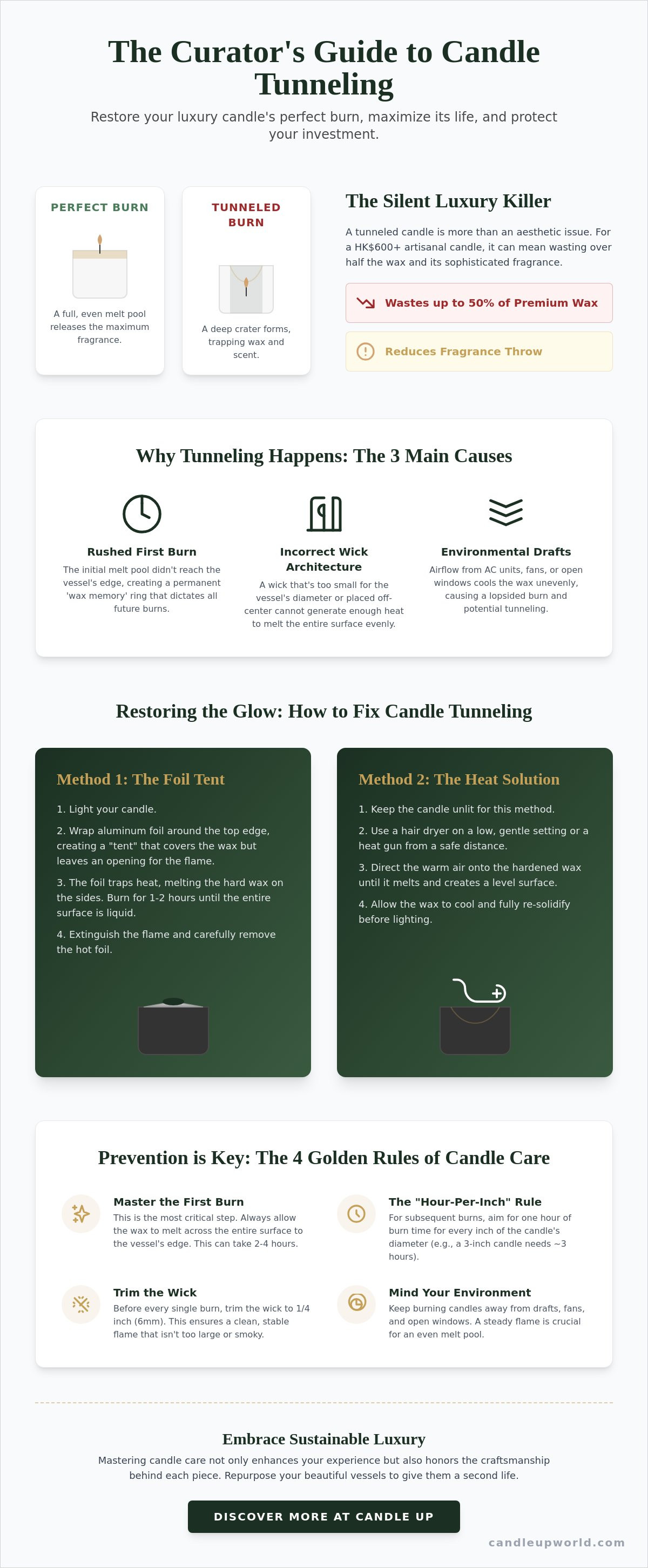
A luxury candle is more than a simple source of light; it's a curated experience of heritage and tranquility. When you light a premium, hand-poured vessel, you expect a clean, even melt that releases layers of sophisticated scent. However, a technical failure often disrupts this ritual. Candle tunneling occurs when only the center of the wax around the wick melts, creating a vertical 'memory ring' that tunnels deeper with every use. This isn't just a minor annoyance. It's a silent killer of the luxury experience that leaves up to 50% of your sustainable wax unused and stuck to the sides of the glass.
Understanding the science of how a candle burns reveals that heat must reach the edges of the vessel to ensure total vaporization of the fragrance oils. When you fail to fix candle tunneling, the economic loss is stark. For a high-end candle priced at HK$580 in Hong Kong's luxury boutiques, a tunnel effectively wastes HK$290 of artisan craftsmanship. Beyond the cost, the visual harmony of your home decor is fractured. A jagged, uneven candle looks neglected, clashing with the refined, contemporary aesthetics of a well-appointed home.
The Concept of Wax Memory
The lifecycle of your candle is decided within the first two hours of its initial lighting. Wax molecules possess a unique structural behavior that dictates future burns. Wax memory is the physical tendency of wax to follow previous melt patterns. If the initial melt pool doesn't reach the vessel's rim, the candle won't naturally expand beyond that diameter in subsequent lightings. This creates a permanent path of least resistance, sentencing the candle to a premature end as the wick eventually drowns in a narrow trench of its own making.
Fragrance Throw and Heat Distribution
A full, liquid melt pool is the engine of scent. Sophisticated base notes like agarwood or sandalwood require consistent, high temperatures to throw their aroma across a room. Tunneling traps these precious fragrance oils within cold, unmelted walls of wax. Without a wide pool, the heat distribution remains shallow and localized. You lose the complexity of the scent profile, and the longevity of the candle is slashed. Learning how to fix candle tunneling is essential to ensure those exotic notes aren't locked away forever in a solid wax prison.
The Architecture of an Even Burn: Why Tunneling Happens
Understanding the physics of a luxury candle is the first step to ensure its longevity. The most common reason enthusiasts need to fix candle tunneling is a rushed first burn. Wax possesses a structural memory; the diameter of the first melt pool dictates the path for every subsequent lighting. If you extinguish the flame before the liquid wax reaches the vessel's edge, you create a permanent "memory ring." This indentation traps the heat, forcing the wick to burn deeper into the center while leaving a stubborn wall of cold wax untouched. It's a cycle that's difficult to break without intervention.
Artisanal craftsmanship plays a pivotal role in this delicate balance. At Candle Up, we meticulously select wick sizes based on the specific diameter of our contemporary vessels. A wick that's too small won't generate enough heat to reach the perimeter, while an off-center placement leads to lopsided melting. Precision is the difference between a tranquil glow and a wasted investment. When the wick is perfectly centered and sized, the heat radiates evenly, maintaining the integrity of the olfactory experience.
The Impact of Urban Architecture and AC
In the vertical landscape of Hong Kong, internal climates often conflict with the art of the burn. Powerful air conditioning units in compact apartments create localized cold zones. If a draft hits one side of your candle, that side of the vessel cools faster than the other, resulting in an uneven melt. High humidity, frequently exceeding 80% in the city, also affects wick combustion by making the cotton more difficult to ignite and maintain. To follow candle safety guidelines and ensure an even pool, position your candle away from AC vents and open windows where erratic airflow might destabilize the flame.
Material Science: Soy Wax vs. Paraffin
The ingredients within your candle dictate its behavior under heat. Sustainable soy wax, while eco-friendly, has a higher viscosity and a lower melting point than traditional paraffin. This means it requires more patience to reach a full melt pool. Paraffin often burns hotter and faster, but it lacks the clean, sophisticated profile of artisanal blends. Candle Up uses a curated soy-based blend designed to maintain a stable temperature, ensuring the heat radiates outward with a steady, intentional rhythm. If you find yourself needing to fix candle tunneling, it's often a sign that the wax's natural cooling cycle was interrupted by external factors or premature extinguishing. For those seeking a more consistent olfactory experience, exploring our tranquil collections can reveal how premium materials transform home fragrance into a lasting legacy.
Restoring the Glow: Proven Methods to Fix Candle Tunneling
A tunneled candle doesn't just look neglected; it represents a loss of the artisanal heritage you've brought into your home. When the wax fails to melt to the edges, you're losing up to 40 percent of the fragrance life you paid for. In a city like Hong Kong, where luxury vessels can cost upwards of HK$600, mastering the art to fix candle tunneling is essential for preserving your investment. You can return your candle to its original, tranquil state using a few curated techniques that respect the integrity of the wax and the vessel's design.
The Aluminum Foil Method (The Professional Standard)
This technique uses radiant heat to melt the stubborn outer ring of wax. It's the most effective way to fix candle tunneling without risking the fragrance's delicate top notes. Wrap a layer of aluminum foil around the top of the vessel, folding it over the edges to create a "tent." Leave a small opening, approximately 2 centimeters in diameter, at the center to allow oxygen to reach the flame.
- Timing: Allow the candle to burn for 30 to 60 minutes. The trapped heat will gently liquefy the high wax walls.
- Safety for Gold Details: If you're using a vessel with 24-carat gold accents or delicate hand-painted motifs, ensure the foil doesn't rub against the exterior. Use a light touch to avoid scratching the premium finish.
- Monitoring: Watch the candle closely. Once the surface is entirely liquid, carefully remove the foil with tongs.
The Gentle Heat Method for Fragile Vessels
For candles in thinner glass or those with highly volatile exotic scents like agarwood, a direct flame might be too aggressive. A hair dryer or a dedicated heat gun offers more control. Set your device to the lowest heat setting to avoid scorching the wax or dissipating the perfume oils too quickly. Aim the air at the raised wax edges rather than the wick itself.
If the melting wax begins to rise too high, it might "drown" the wick. You'll need to pour off the excess liquid wax into a heat-safe container or soak it up with a paper towel. This ensures the flame remains strong enough to maintain the new, level surface. Always check that the wick stays centered during this process; a shifting wick can lead to uneven heat distribution in future burns.
For severe cases where the wick is already buried, a hands-off approach using a candle warmer is often the safest choice. Placing the vessel on a warmer for two hours will melt the entire wax pool from the bottom up, resetting the memory of the candle. If the tunneling is minor, you might opt for surgical removal. Use a small spoon to gently scrape away the hard wax "cliffs" until the surface is level. Don't discard these fragments. You can place them in a wax melter to enjoy the scent without wasting a single drop of the premium blend.
The Meticulous Curator’s Guide to Preventing Future Tunneling
Preserving the structural integrity of a luxury candle requires more than just a match; it demands an understanding of wax memory. To fix candle tunneling permanently, you must treat the initial burn as a foundational ritual. When wax melts, it follows the path of least resistance. If the first session is cut short, the candle creates a narrow "memory ring" that it will stubbornly follow until the wick is drowned. This isn't just about aesthetics; it's about honoring the craftsmanship of the vessel and ensuring you enjoy every hour of the intended scent profile.
Mastering the First Burn
The golden rule for any premium vessel is simple: the wax must reach the edge of the glass before you extinguish the flame. Don't light your candle if you have less than three hours of relaxation ahead. A standard luxury candle with a 3-inch diameter typically needs 180 minutes to achieve a full melt pool. You’ll know it’s ready when the liquid wax reaches the perimeter with no solid "islands" remaining. For those seeking sustainable elegance, The Ultimate Guide to Luxury Ecofriendly Candles offers deeper insights into how high-quality wax blends behave during this critical phase.
The Art of Wick Trimming
A steady, tranquil flame depends entirely on the height of the wick. Before every light, trim the wick to exactly 5mm. A long wick creates an oversized, dancing flame that generates excessive heat, which can lead to uneven melting and soot buildup on the vessel’s rim. While standard scissors might work, they often fray the wick or drop debris into the wax. A professional trimmer is designed to clip the wick cleanly and catch the remnant, preventing "mushrooming" and ensuring the flame remains controlled. Consult The Meticulous Candle Wick Trimmer Guide to master this essential maintenance step.
Beyond the burn itself, your storage habits play a vital role in wax health. Hong Kong’s humidity and temperature shifts can be unforgiving. Follow these storage rituals to maintain your collection:
- Keep vessels in a cool, dry environment away from direct sunlight to prevent wax "sweating."
- Avoid placing candles near air conditioning vents or drafty windows, as uneven airflow causes the flame to lean and fix candle tunneling into one side of the wax.
- Replace the lid or use a cloche after the wax has fully cooled to protect the surface from dust and preserve the delicate aromatic notes.
By following these meticulous steps, you ensure that your olfactory art remains as beautiful as the day it arrived. Explore our collection of hand-poured luxury candles designed for a perfect, tranquil burn from the first light to the final drop.
Beyond the Burn: Sustainable Luxury and Repurposing
Even the most diligent efforts to fix candle tunneling might leave a thin ring of unburnt wax at the bottom of a vessel once the wick has reached its end. In a world of fast-moving consumer goods, Candle Up views these remnants as opportunities for creative rebirth rather than waste. If your candle has reached its natural conclusion, scoop out the remaining wax and place it in a ceramic wax warmer. This allows you to enjoy every last note of the fragrance, ensuring the investment you made in your home's olfactory atmosphere provides maximum value.
Upcycling Your Luxury Vessels
Our jars are designed with a "Dual-Purpose Promise" in mind. Once the wax is gone, these vessels transition into functional art. Our hand-poured terra cotta jars or those finished with 24-carat gold accents make exquisite desk organizers for fountain pens or chic planters for small succulents. To clean them safely, pour warm water into the jar to float the wax to the top. Once it cools and hardens, the wax pops out effortlessly. This commitment to longevity aligns with the Luxury Home Decor Trends 2026, where found luxury and sensory sanctuaries define the modern Hong Kong home. Using these jars as premium drinkware for a chilled cocktail is another way to bring a touch of artisanal history to your table.
The Candle Up Quality Promise
Prevention is the ultimate cure. Our artisanal French-inspired process ensures that each pour is perfectly balanced. We use high-quality, lead-free cotton wicks that provide a clean, steady flame. This choice of materials significantly reduces the likelihood that you'll ever need to fix candle tunneling in the first place. By sourcing premium materials like agarwood and rare botanicals, we create a burn experience that's as reliable as it is evocative. We invite you to explore our "Tranquil" collection to witness how meticulous craftsmanship results in a flawless, edge-to-edge pool of wax every time.
Being a Cultural Curator means treating home fragrance as a legacy. It's about respecting the materials and the stories they tell. When you choose a candle that honors historical trading roots or uses 24-carat gold signifiers, you aren't just buying a scent; you're curating a piece of history for your living room. Sustainable luxury is the final step in the ritual of the burn. It's a thoughtful way to live that values quality over quantity and beauty over utility. By caring for your candles and repurposing their vessels, you honor the craftsmanship that went into every pour.
Mastering the Art of the Eternal Flame
A tunneled candle doesn't have to signal the end of your sensory journey. By employing the foil method or a dedicated heat lamp, you can successfully fix candle tunneling and reclaim the full potential of your investment. The secret to a lasting legacy lies in the very first burn. Allowing the wax to reach the vessel's edge during those initial two hours prevents the memory rings that often plague high-end scents. It's a simple act of mindfulness that preserves the architectural integrity of the wax and ensures every gram of fragrance is utilized.
At Candle Up, we honor this meticulous care through our French-founded artisanal craftsmanship. Every piece features sustainable soy wax and lead-free wicks, ensuring your Hong Kong residence remains a sanctuary of pure, tranquil air. Our commitment to sustainable luxury means the experience continues long after the scent dissipates. These vessels are specifically designed to be repurposed as premium drinkware, adding a touch of curated elegance to your table. You're not just buying a fragrance; you're investing in a piece of functional art that respects both tradition and the environment.
Experience a perfect, tranquil burn with our Luxury Ecofriendly Candle Collection
Your home deserves the steady, golden glow of a perfectly maintained flame. Embrace the ritual of the burn and let every flicker tell a story of refined tranquility.
Frequently Asked Questions
Is it possible to fix a candle that has tunneled all the way to the bottom?
Yes, you can still reclaim the essence of your candle even if tunneling reaches the base. While the wick is likely lost, you can repurpose the remaining wax by using a professional candle warmer or a double boiler method. This allows you to enjoy the exotic scents of agarwood or jasmine without a flame. Once melted, the wax can be poured into smaller votives, allowing you to repurpose the original vessel as a sophisticated tumbler.
Can I use a microwave to melt the wax and fix tunneling?
You shouldn't use a microwave to melt candle wax because the metal wick tab at the bottom poses a fire risk. Most luxury candles utilize aluminum or steel sustainer tabs that can spark within seconds. Instead, use the foil method or a heat gun to gently fix candle tunneling by leveling the surface. This controlled approach protects the integrity of the tranquil fragrance and the sophisticated vessel without risking a household fire.
How long should I burn my candle for the first time to prevent a memory ring?
Your initial burn should last between 2 and 4 hours to ensure the wax pool reaches the very edge of the vessel. This crucial first session prevents the formation of a memory ring, which is the leading cause of future tunneling. For a standard 200g candle, 180 minutes of continuous burning is often the minimum required to establish a proper liquid surface. This simple act of patience preserves the artisanal beauty of your piece.
Why does my candle flame keep flickering and causing an uneven burn?
A flickering flame is usually caused by air currents or a wick that exceeds 5mm in length. Drafts from Hong Kong’s high-velocity air conditioning units can disturb the combustion, leading to soot and an uneven melt. Trim your wick before every light to maintain a steady, tranquil glow. If the flame dances excessively, move the candle to a protected area to ensure the luxury wax consumes evenly across the surface without wasting material.
What should I do if the wick is too short and gets buried in the melted wax?
If your wick becomes submerged, you can gently scrape away the surrounding solid wax or soak up the liquid pool with a paper towel. Use a small tool to carefully pull the wick upright while the wax is still soft. Maintaining a proper wick height is essential to fix candle tunneling and prevent the flame from drowning. This meticulous care ensures your premium candle continues to serve as a sophisticated accent in your home for its full lifespan.
Does the type of wax (soy vs. paraffin) affect how easily a candle tunnels?
Soy wax has a lower melting point of approximately 49 degrees Celsius, making it more prone to memory rings than traditional paraffin. While paraffin is more forgiving, the artisanal soy blends used in premium collections require disciplined burn times to avoid structural issues. 85 percent of tunneling cases occur due to short burn cycles regardless of the wax composition. Understanding these material properties helps you maintain the tranquil atmosphere of your living space through proper care.
Can I still fix a candle if the vessel is made of delicate material like hand-painted ceramic?
You can safely restore candles in delicate hand-painted ceramic or 24-carat gold accented vessels by using the gentle hairdryer method. Avoid the oven or direct boiling water, as extreme temperature shifts can crack artisanal terra cotta or damage intricate glazes. Apply low heat in 30 second intervals to slowly liquefy the high-side wax. This cautious technique respects the craftsmanship of the vessel while restoring the olfactory art within, ensuring the legacy of the piece remains intact.


