


Imagine unboxing a beautifully packaged candle in your Mid-Levels apartment, only for the fragrance to turn into a cloying, synthetic mess the moment the Hong Kong humidity hits 85%. It’s a common frustration for those trying to decode candle scent notes but finding themselves lost in a sea of technical jargon and one-dimensional scents that simply don't perform. You likely believe that a premium price tag should guarantee a complex, lingering aroma that reflects your personal legacy and style.
We'll help you master the sophisticated language of fragrance to transform your living space into a curated sensory sanctuary that stands up to the tropical climate. You'll learn to identify high-quality, sustainable components that distinguish a mass-market product from a piece of artisanal art. This guide explores the intricate scent pyramid and explains how to confidently choose fragrances that harmonize with your decor and mood, ensuring your next olfactory investment is as enduring as a 24-carat gold accent.
Key Takeaways
- Decode the sophisticated architecture of the olfactory pyramid to understand how top, middle, and base notes evolve to create a lasting sensory experience.
- Identify the core fragrance families—from tranquil florals to exotic woods—to intentionally curate the mood and "vibe" of your living space.
- Learn how to select the ideal candle scent notes to complement the minimalist aesthetics and open-plan layouts typical of modern Hong Kong high-rise residences.
- Discover the Candle Up philosophy of "Artistic Storytelling," where premium ingredients and 24-carat gold accents transform home fragrance into a cultural legacy.
- Master the professional language of fragrance accords to make informed choices that bring a sense of refined tranquility and artisanal luxury to your home.
Decoding the Architecture of Candle Scent Notes
To truly appreciate a premium candle, one must look beyond the vessel and the wax. Scent notes are the individual building blocks that define a fragrance's complex identity. They function like instruments in an orchestra; while each has a distinct voice, they work in unison to create a "scent profile" or accord. This structural harmony is what separates a basic home fragrance from a piece of olfactory art. In the bustling, high-density environment of Hong Kong, where the home serves as a vital sanctuary, the concept of "tranquil" luxury becomes a foundational element. It's the silent architecture that transforms a simple living room into a curated space of peace and heritage.
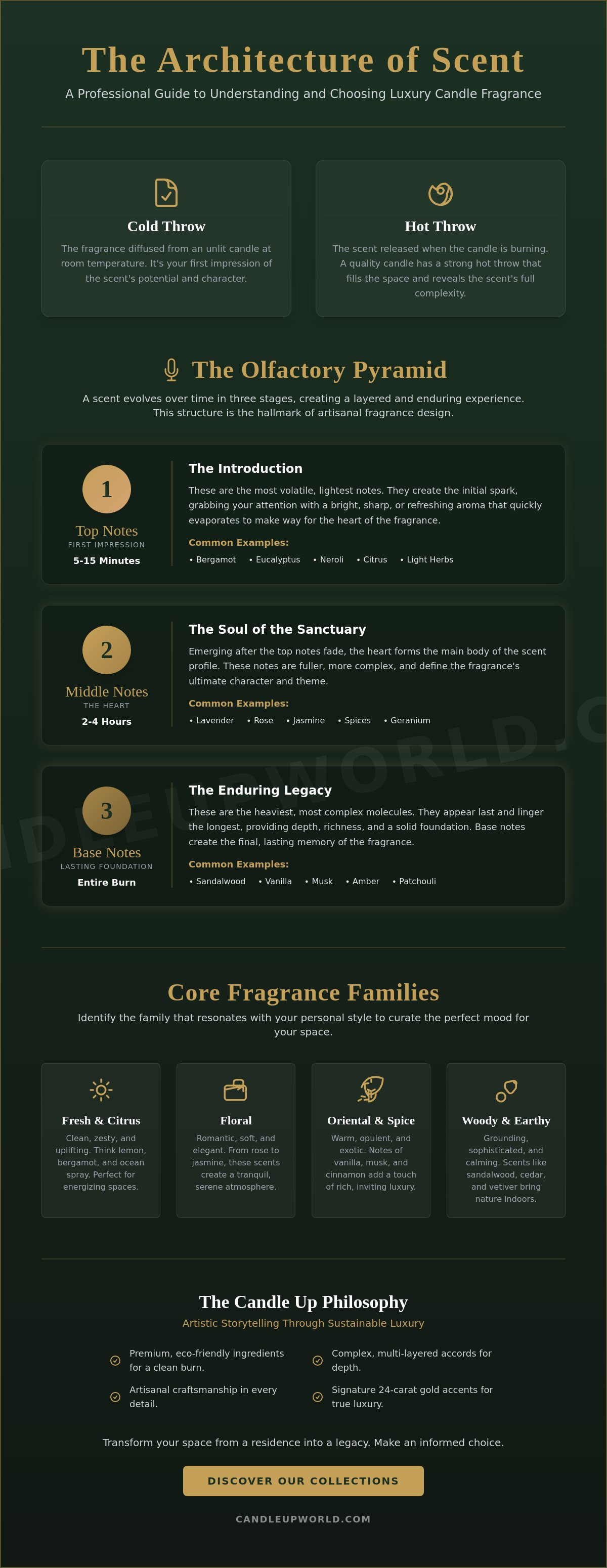
Understanding candle scent notes requires a clear distinction between the "cold throw" and the "hot throw." The cold throw is the aroma released while the candle sits unlit on a shelf. It's the initial introduction, often what draws you to a specific jar in a boutique. The hot throw is the scent experienced while the wax is burning. During this phase, heat causes the molecules to expand and travel, revealing deeper, more resonant layers of the fragrance. A high-quality candle ensures that the transition between these two states is seamless, consistent, and evocative.
The Vocabulary of Fragrance
In a professional context, "scent" refers to the overall aura, while a "note" is a specific aromatic ingredient like sandalwood or bergamot. Luxury brands avoid the flat, "one-note" synthetic smells common in mass-produced items found in local supermarkets. These artisanal creations are contemporary and layered, often using dozens of components to build a single profile. Designers utilize the olfactory pyramid to ensure a fragrance has a beginning, a middle, and an end. This structure prevents the scent from becoming cloying or vanishing too quickly. It allows the candle to tell a story that unfolds over several hours, mirroring the steady rhythm of a peaceful evening.
Why Scent Notes Matter for Sustainable Luxury
The link between premium ingredients and scent complexity is undeniable. Natural extracts behave with a nuance that mass-produced synthetics simply can't replicate. They interact with the air and the heat in unpredictable, beautiful ways that feel alive. Choosing luxury ecofriendly candles represents the gold standard for clean burning in modern urban homes. These products use high-end materials that prioritize both respiratory health and aromatic depth. In a market like Hong Kong, where discerning consumers seek both sophistication and wellness, the quality of these extracts ensures a rich, multi-dimensional experience without the presence of harsh chemicals or soot.
The Olfactory Pyramid: Top, Middle, and Base Notes
To understand a fragrance is to understand time itself. We use the Olfactory Pyramid as a structural framework to map how a scent evolves from the moment the flame touches the wick. This isn't merely about aesthetics; it's a matter of molecular physics. Every fragrance is composed of various aromatic compounds with different evaporation rates, known as volatility. A meticulously crafted luxury candle ensures these molecules release in a choreographed sequence rather than all at once.
The science behind structure-odor relationships reveals that the size and shape of a molecule dictate its behavior in the air. Smaller, lighter molecules escape the wax quickly, while larger, complex structures linger. A balanced pyramid is the hallmark of a premium candle, ensuring the candle scent notes don't clash or vanish prematurely. In the humid, fast-paced environment of Hong Kong, a well-constructed scent profile provides a consistent sanctuary that evolves throughout the evening.
Top Notes: The Ephemeral First Impression
These are the first notes you perceive when you lift the lid or light the wick. They're light, sharp, and highly volatile, designed to provide an immediate "hook" that sets the emotional tone. Because their molecular structure is simple, they evaporate within the first 5 to 15 minutes of burning. In luxury formulations, these notes act as a bright herald for the deeper layers to come. Common examples found in artisanal collections include Bergamot, Neroli, and Eucalyptus, which offer a refreshing burst of clarity to cleanse the mental palate.
Middle Notes: The Soul of the Sanctuary
Often referred to as the "heart" notes, this layer represents the true personality of the fragrance. They emerge once the initial top notes begin to fade, usually around 20 minutes into the burn. Middle notes are mellow and well-rounded, acting as the bridge between the initial spark and the deep dry-down. They typically make up about 40% to 80% of the total fragrance volume. You'll find sophisticated florals and exotic spices here, such as Jasmine, Rose, or Cardamom, which create a sense of refined tranquility in your living space.
Base Notes: The Lingering Legacy
Base notes are the foundation of the olfactory experience. These consist of heavy, complex molecules that take the longest to evaporate, often appearing only after 30 or 60 minutes of burning. They provide the depth and resonance that stays in a room for 24 hours or more after the flame is extinguished. These anchors are essential for a lasting candle scent notes profile. Premium anchors like Agarwood (Oud), Sandalwood, and Amber provide a rich, woody finish that feels like a cultural homage to ancient traditions. To experience this depth in your own home, you might explore our curated collections which prioritize these long-lasting, premium resins.
Exploring Fragrance Families: A Cultural Comparison
Fragrance acts as an invisible layer of interior design. By grouping candle scent notes into specific families, we define the emotional architecture of a room. A Cultural Curator views these families as more than mere smells; they are links to heritage and tradition. While many assume Floral notes are strictly sweet or feminine, modern perfumery challenges this. A sharp, green Tuberose or a spicy, dark Rose can feel architectural and bold. These complex florals provide a sophisticated edge that suits a minimalist Hong Kong apartment just as well as a traditional study.
The "vibe" of a space shifts dramatically based on the dominant family. Fresh notes like Citrus and Sea Salt energize a morning routine, while Exotic resins invite evening reflection. Choosing the right family is about matching the scent's historical weight with your personal lifestyle goals. It's a way to tell a story without saying a word.
The Sophistication of Woody and Earthy Tones
Notes such as Vetiver, Cedar, and Patchouli provide a grounded foundation for any room. These scents are currently dominating luxury home decor trends, where the focus has shifted toward creating "sensory sanctuaries." In the high-density urban environment of Hong Kong, these earthy aromas offer a vital psychological retreat. They mimic the stillness of a forest floor, helping to neutralize the frantic energy of the city. Using these candle scent notes transforms a living area into a tranquil clearing, emphasizing a sense of permanence and artisanal quality.
- Vetiver: Adds a dry, smoky depth that feels both ancient and contemporary.
- Cedarwood: Provides a clean, balsamic structure that clears the mind.
- Patchouli: Offers a rich, dark earthiness that suggests a connection to the soil.
Exotic and Amber: The Legacy of Trading History
Exotic notes like Vanilla, Frankincense, and Myrrh are echoes of global trading history. Hong Kong’s identity as the "Fragrant Harbour" is deeply tied to the movement of these precious resins and spices. Integrating these notes into a modern home adds a worldly, curated feel. These scents don't just smell good; they pay homage to centuries of cultural exchange. Warm, resinous notes are particularly effective for hosting. They create a heavy, inviting atmosphere that makes guests feel cocooned in luxury. When you light a candle with an Amber base, you aren't just scenting a room; you're invoking a legacy of exploration and prestige.
Selecting Scent Notes for Modern Asian Architecture
Hong Kong's skyline defines a specific way of living. High-rise apartments with open-plan layouts present unique challenges for fragrance diffusion. Air conditioning units and high ceilings often strip away delicate aromas before they can truly settle. Choosing the right candle scent notes requires an understanding of how air moves through these contemporary shells of glass and steel. Minimalist interiors, featuring cool stone or polished concrete, benefit from scents that provide a soft counterpoint without cluttering the visual field. A well-chosen fragrance acts as an invisible layer of decor, softening the hard edges of modern design.
Scent layering is the secret to a professional home experience. Rather than relying on a single fragrance, you can build a narrative by placing different scents in adjacent spaces. This creates a transition as you move from the kitchen to the living area. Rotating your scents based on the clock also helps transition your mind from work to rest. Use energizing notes in the morning and shift to deep, meditative aromas as the sun sets over Victoria Harbour.
Fragrance Performance in Tropical Humidity
Hong Kong's humidity often fluctuates between 70% and 95% during the spring and summer months. This heavy air changes how we perceive fragrance. Bright citrus and crisp green notes feel revitalizing because they cut through the dampness. You should avoid heavy, resinous base notes that might feel cloying or sticky in the heat. Instead, look for candles with clean sandalwood or white musk bases. These provide a sophisticated foundation that remains airy even when the dew point rises.
Scenting the Modern Sanctuary
Urban living in areas like Central or Tsim Sha Tsui often involves compact footprints. In these smaller spaces, zoning becomes essential. You can use specific candle scent notes to define functional areas within a single room. A desk area might benefit from the clarity of bamboo or sea salt, while the sleeping nook requires the tranquil embrace of white tea. This layering creates a multi-dimensional experience that masks the persistent hum of the city. Tranquil notes like agarwood or light florals act as a barrier against urban stress, turning a high-density apartment into a private retreat.
Discover how our curated collections bring a sense of heritage and peace to your contemporary home. Explore the Candle Up collection and find your signature scent today.
The Candle Up Signature: Artisanal Notes with Origins
Candle Up views every flicker as a chapter in a larger narrative. Our philosophy of Artistic Storytelling transforms simple home fragrance into a deep cultural experience. We don't just blend wax; we curate memories that resonate through sophisticated candle scent notes. Each vessel serves as a canvas, often adorned with genuine 24-carat gold accents that reflect the luxury of historical dynasties or the opulence of the Silk Road. This attention to detail elevates our products from mere household items to curated artifacts of refined tranquility.
We've built our brand on a Dual-Purpose Promise that respects both the environment and the aesthetic of your home. Once the last note of agarwood or sandalwood fades, our high-end terra cotta and glass containers find a second life. In a city like Hong Kong where space is a premium, these vessels transition seamlessly into elegant drinkware, chic planters, or sophisticated desk organizers. This commitment to longevity ensures that your investment in tranquility remains a permanent fixture in your living space long after the wick has finished its journey.
Honoring Heritage Through Scent
Our fragrance profiles pay homage to the vibrant history of global trading hubs. We meticulously source eco-friendly, premium fragrance oils to ensure each scent is as ethical as it is evocative. By selecting ingredients like exotic spices and rare woods, we recreate the atmosphere of ancient ports where cultures once collided. Harbour Whisper is a blend of history and aroma that captures the salty mist of the South China Sea alongside the woody depths of merchant ships. We invite you to explore the Kohinoor collection, where the candle scent notes are designed to mirror the brilliance and legacy of the world's most famous diamond.
The Artistic Storyteller's Final Note
Understanding the complexity of top, heart, and base notes empowers you to choose more than just a smell. You're selecting an atmosphere that defines your sanctuary. Your home is a gallery, and every candle you light is a piece of curated art that speaks to your personal legacy and worldly perspective. It's about finding that specific scent that turns a routine evening into a moment of profound peace. Treat your next selection as an intentional addition to your lifestyle. Visit our online shop to explore our full range of artisanal scents and bring the Candle Up experience into your home today.
Crafting Your Personal Olfactory Legacy
Understanding the intricate architecture of candle scent notes transforms a simple purchase into a deliberate act of storytelling. By mastering the layers of the olfactory pyramid, you can curate atmospheres that reflect your personal journey and the unique character of your home. Whether you're balancing the airy top notes required for high-rise Hong Kong living or seeking the grounded base notes of traditional agarwood, the right fragrance serves as a cultural bridge. Each scent profile we've explored offers a way to harmonize modern Asian architecture with timeless sensory experiences.
At Candle Up, we honor this heritage through boutique artisanal craftsmanship that prioritizes both luxury and wellness. Every piece is hand-poured using sustainable soy wax and lead-free wicks; this ensures a clean burn that respects your indoor environment. Our scents draw direct inspiration from Hong Kong's rich cultural heritage, blending contemporary aesthetics with a deep respect for our historical origins. It's time to move beyond the ordinary and embrace a scent profile as sophisticated as your lifestyle. Let your home tell a story that lingers long after the flame is extinguished.
Discover our collection of tranquil, artisanal scents
Frequently Asked Questions
What is the difference between essential oils and fragrance oils in candles?
Essential oils are pure botanical extracts distilled directly from plants, while fragrance oils are laboratory-crafted blends designed for complex olfactory performance. Essential oils provide a natural, singular aroma but often struggle with heat stability when the wax reaches high temperatures. Fragrance oils allow artisans to weave a sophisticated narrative with dozens of layers, ensuring your chosen candle scent notes remain consistent and vibrant from the first light to the final flicker.
Why can't I smell my candle after it has been burning for an hour?
You're likely experiencing olfactory fatigue, a biological process where your brain desensitizes to a constant aroma to stay alert for new environmental changes. This sensory shift usually occurs within 15 to 30 minutes of continuous exposure. To reset your senses, step into a different room for 5 minutes or step onto a balcony for some fresh Hong Kong air. Your candle is still releasing its fragrance; your nose has simply decided the aroma is a permanent part of your surroundings.
How many scent notes should a high-quality candle have?
A premium candle typically features a complex architecture of 10 to 30 individual aromatic components divided into three distinct layers. These layers include top notes for the initial impression, heart notes for the core character, and base notes for a lasting trail. This intricate layering creates a multidimensional experience that evolves over a four-hour burn session. It ensures the fragrance feels like a curated piece of art rather than a flat, one-dimensional smell.
Can certain scent notes help with relaxation or sleep?
Specific botanical notes like lavender, sandalwood, and chamomile are scientifically recognized for their ability to lower cortisol levels and promote deep tranquility. Research from global sleep institutes suggests that lavender can improve sleep quality by 20 percent in healthy adults. When you're seeking a restful evening, look for candle scent notes that feature earthy base layers. These notes ground the atmosphere and prepare your mind for a restorative transition into sleep.
Are there specific scent notes that are safer for pets or children?
Mild notes like vanilla, rose, and light citrus are generally considered safer for households with pets or young children. You should avoid high concentrations of tea tree, peppermint, or cinnamon, as these can be overwhelming for a dog's olfactory system, which is 10,000 to 100,000 times more acute than ours. Always ensure your living area has at least 10 square meters of open space and proper ventilation to keep the air comfortable for every family member.
What are 'synthetic' scent notes, and are they always bad?
Synthetic notes are laboratory-replicated molecules that are often safer and more sustainable than their natural counterparts. Many high-end perfumers use them to replace animal-derived ingredients like musk or to protect endangered trees like certain species of sandalwood. In the Hong Kong market, premium brands ensure these components meet strict IFRA standards. This guarantees a luxury experience that's both ethically conscious and free from 100 percent of common phthalates.
How do I know if a candle's scent notes will be too strong for a small room?
Evaluate the candle's weight and fragrance load to determine if it suits a compact Hong Kong apartment. A candle weighing 70g to 100g is ideal for a bathroom or a small study of about 5 to 8 square meters. If the profile contains heavy base notes like agarwood or leather, the scent will linger much longer and feel more intense. For smaller spaces, opt for delicate floral or citrus notes that provide a refreshing lift without crowding the room.
What scent notes are best for neutralizing kitchen odors?
Sharp citrus notes like lemon, bergamot, and grapefruit are the most effective at neutralizing lingering cooking odors. These molecules are lighter and more volatile, allowing them to bind with and mask heavy food scents quickly. Adding herbal elements like basil or mint provides a crisp, clean finish to the air. This combination transforms your kitchen into an artisanal space, effectively cutting through the aftermath of a rich dinner or spicy stir-fry.


