


You light a beautifully packaged candle to unwind after a long day, but within minutes, a sharp pressure builds behind your eyes. It's a frustrating reality for many who find that mass-market scents turn a peaceful moment into a physical struggle. Finding candles that don't cause headaches isn't just about avoiding strong smells; it's about demanding material purity and sophisticated craftsmanship. Many popular brands still rely on paraffin wax, a petroleum byproduct known to release volatile organic compounds like benzene and toluene when burned.
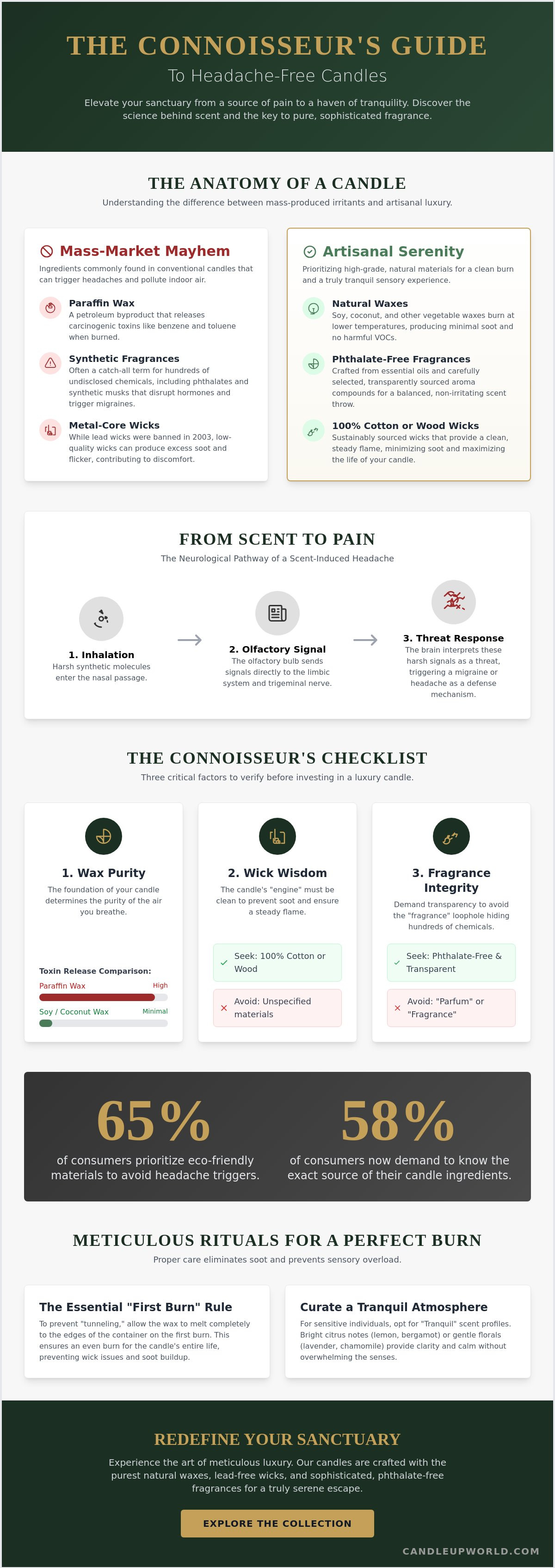
We believe your home should be a sensory sanctuary, not a source of pain. With 65% of consumers now prioritizing eco-friendly materials to avoid these triggers, the shift toward clean luxury is more than a trend. You'll learn how to curate a tranquil atmosphere using soy and coconut waxes paired with phthalate-free fragrances. This guide explores the science of olfactory art to ensure your next investment aligns with both your well-being and your legacy of sophisticated taste.
Key Takeaways
- Identify the crucial difference between neurological sensory overload and chemical irritation to pinpoint your specific scent triggers.
- Learn to identify candles that don't cause headaches by seeking out low-temperature waxes and sustainably sourced, lead-free wicks.
- Curate a sophisticated atmosphere using "Tranquil" scent profiles and bright citrus notes designed for immediate clarity and calm.
- Adopt meticulous maintenance rituals, such as the essential "first burn" rule, to eliminate the soot that often leads to physical discomfort.
- Elevate your space with luxury candles that prioritize artisanal heritage and phthalate-free ingredients for a truly serene sanctuary.
The Science of Scent: Why Do Some Candles Cause Headaches?
A headache triggered by scent is rarely a simple matter of personal preference. It's often a physiological protest against the invisible chemistry of mass production. Understanding why certain fragrances feel like a physical assault requires a look at the olfactory bulb, the small structure in the forebrain that processes every aromatic molecule you inhale. Because this bulb is directly linked to the limbic system and the trigeminal nerve, it can trigger an immediate neurological response. If a candle relies on harsh, heavy synthetics, your brain may interpret these signals as a threat, resulting in a sudden migraine or a dull, lingering throb. Finding candles that don't cause headaches starts with auditing the ingredients that mass-market brands often hide behind beautiful packaging.
Many mass-market manufacturers prioritize "cold throw," which is the strength of the scent when the candle is unlit on a store shelf. To achieve this immediate impact, they often use high concentrations of synthetic boosters that compromise air quality. Distinguishing between a true scent allergy and a VOC-induced headache is vital for anyone seeking candles that don't cause headaches. An allergy typically involves the immune system, causing sneezing or itchy eyes, whereas a headache from Volatile Organic Compounds is a toxicological reaction to the chemicals themselves. Data from 2026 suggests that 58% of consumers now demand to know the exact source of their candle ingredients, reflecting a growing awareness of these physiological triggers.
The Hidden Culprits: VOCs and Synthetic Musks
In the confined spaces of modern urban apartments, Volatile Organic Compounds (VOCs) can accumulate quickly to irritating levels. The term "Fragrance" or "Parfum" on a label is frequently a legal loophole, acting as a catch-all for hundreds of undisclosed chemicals that haven't been tested for long-term inhalation safety. Synthetic musks are particularly notorious for their ability to cross the blood-brain barrier and trigger migraine pathways in sensitive individuals. Choosing a brand that insists on transparency ensures you aren't inviting these invisible irritants into your sanctuary. A meticulous approach to scent curation avoids these heavy, lingering chemicals in favor of balanced olfactory art.
Paraffin vs. Natural Wax: A Neurological Perspective
The foundation of any candle is its wax, and the choice of material determines the purity of the air you breathe. When exploring different types of candle wax, the distinction between petroleum-based and plant-based options becomes clear. Paraffin is a long-chain hydrocarbon derived from petroleum that releases toluene and benzene upon combustion, whereas soy wax consists of triglycerides from vegetable sources that burn at a lower temperature with minimal carbon byproduct. This lower burn temperature is essential because it prevents the release of microscopic soot particles that can lodge in the respiratory system. For the discerning host, a clean-burning profile is the only acceptable standard for maintaining a tranquil, pain-free home.
The Connoisseur’s Checklist: What to Look for in Headache-Free Candles
A curated home demands more than just visual beauty; it requires a meticulous audit of the air we share. For the discerning individual, finding candles that don't cause headaches is a matter of technical precision. It isn't merely about the absence of irritation, but the presence of high-grade materials that respect your well-being. To ensure a sensory experience remains truly tranquil, you must look past the aesthetic vessel and scrutinize the mechanical components within. This technical vetting process separates mass-produced items from artisanal artifacts designed for a legacy of comfort.
The wick serves as the engine of the candle. While the CPSC officially banned lead-cored wicks in 2003, verifying the use of 100% cotton or sustainably sourced wooden wicks remains essential. These materials provide a steady flame that doesn't flicker or dance uncontrollably, which is a primary cause of soot production. Additionally, a sophisticated host understands that a "balanced throw" is superior to an overwhelming one. A candle that floods a room with fragrance in seconds is often over-saturated with stabilizers. These chemicals can trigger neurological sensitivity, whereas a balanced throw creates a gentle, atmospheric presence that invites exploration rather than causing retreat.
Wax Purity: Beyond the Label
Not all natural waxes are created equal. While soy offers a clean burn, coconut wax is prized for its ability to carry complex scents without the need for heavy chemical additives. Many luxury ecofriendly candles utilize proprietary blends of these waxes to achieve a lower melting point. This lower temperature minimizes the release of irritants into your living space. You can perform a "Soot Test" at home to verify wax quality: light your candle for 30 minutes in a draft-free area. If a black residue forms on the glass or a dark plume rises from the flame, the wax likely contains impurities that could disrupt your peace.
Fragrance Integrity and Essential Oil Safety
There is a common misconception that "natural" always equals "safe." In reality, certain essential oils like cinnamon or peppermint can be potent triggers for those sensitive to how candles can trigger headaches. Sophisticated, multi-layered scent profiles are often gentler on the senses than single-note synthetics. These luxury formulations use high-quality carrier oils to stabilize the fragrance release. This ensures the scent evolves slowly, much like a fine perfume, rather than hitting the olfactory system with a sharp, singular spike. If you're seeking a sanctuary of refined calm, exploring our Tranquil collections offers a path to scent without compromise.
Curating the Olfactory Narrative: Scent Profiles for Sensitive Noses
Scent is an invisible architecture that defines the boundaries of your home sanctuary. For those prone to sensory discomfort, the selection process requires an artistic eye and a scientific nose. "Tranquil" scent profiles serve as the primary foundation for an environment free from pain. By prioritizing clarity over raw intensity, you can enjoy candles that don't cause headaches without sacrificing the luxury of a well-fragranced room. Green and citrus notes, such as bergamot or crushed moss, are particularly effective for providing immediate mental clarity. These "high-vibration" scents dissipate cleanly, unlike heavy florals such as jasmine or tuberose; these often contain high concentrations of indoles that can overwhelm the trigeminal nerve.
Soft woods provide a grounded, sophisticated alternative to the cloying sweetness found in mass-market products. Agarwood, also known as oud, and creamy sandalwood offer a rich depth that feels substantial yet remains gentle on the senses. These notes act as anchors, providing a sense of historical legacy and worldly travel. When these ingredients are sourced with meticulous care, they lack the sharp chemical edges that characterize cheaper, synthetic wood mimics. Finding candles that don't cause headaches often means looking for these refined, woody foundations that provide a steady, comforting presence.
The Art of Subtle Sophistication
Understanding the luxury home fragrance pyramid is essential for any cultural curator. This structure consists of top, middle, and base notes that unfold over time. While base notes like amber and musk are often blamed for migraines, the issue is usually the quality of the molecule rather than the scent family itself. High-end, artisanal musks are rendered headache-safe through rigorous refinement. This ensures your sensory story whispers its presence rather than screaming for attention. It allows the fragrance to become a perfect accent to your dining table or study without dominating the space.
Seasonal Considerations for HK and SG Climates
In the high humidity of Hong Kong or Singapore, scent molecules carry more weight as they cling to moisture in the air. This environmental factor can make even a moderate scent feel oppressive if it's too heavy. For those navigating the luxury lifestyle in Hong Kong in 2026, adapting to the climate is key. Cooling mint, crisp linen, and ozonic notes are ideal for tropical conditions. These profiles cut through the humidity to provide a refreshed atmosphere. Choosing lighter, more atmospheric scents ensures your home remains a tranquil retreat regardless of the external heat and moisture.
Meticulous Rituals: Burn Habits to Prevent Sensory Overload
Even with the purest materials, the way you interact with a flame determines the air quality of your home. Establishing meticulous habits is the final step in ensuring you enjoy candles that don't cause headaches. The "First Burn" is a non-negotiable rule for any connoisseur. You must allow the wax to melt completely to the edges of the vessel, creating a "memory pool." This prevents tunneling, which leads to uneven heating and the release of trapped irritants in later sessions. If a candle tunnels, the deeper wax often burns poorly, creating more smoke and potential triggers for sensitive noses.
Wick Maintenance and Flame Control
A neglected wick is the primary source of soot, a known trigger for respiratory distress and neurological pain. By following a candle care guide, you can maintain a precise 1/4 inch wick height. This prevents "mushrooming," where carbon buildup creates a heavy, flickering flame that burns too hot. A hot, unstable flame consumes wax inefficiently and releases microscopic carbon particles into your sanctuary. For those with heightened sensitivity, a snuffer is a superior tool to blowing out a flame. It traps the smoke within the bell, preventing that final, sharp plume of charred scent from disrupting your peace.
Environmental Optimization
In the vertical living spaces of Hong Kong or Singapore, air circulation requires strategic planning. Small, modern apartments can trap fragrance molecules, leading to sensory overload if not managed correctly. Cross-ventilation is the most effective technique; crack a window on opposite sides of the room to create a gentle, consistent air current. Avoid placing your candle at eye or nose level, such as on a high mantle or a desk right in front of you. Instead, place it on a coffee table or a side console. This allows the scent to rise and disperse naturally through the room. Managing ambient temperature is also vital, as a drafty room causes a flame to flicker, which can increase soot production significantly.
Scent fatigue is a physiological reality where the brain stops registering a fragrance but continues to process the chemical presence. To maintain a tranquil atmosphere, limit your burn time to sessions of two to four hours. This duration is sufficient to fill a room with a sophisticated narrative without saturating the air, a key factor in maintaining candles that don't cause headaches. After extinguishing, allow the space to "breathe" for an hour before relighting. This disciplined approach ensures that your home remains a place of refined tranquility. To begin your journey toward a pain-free sensory experience, explore our curated collections of luxury candles today.
Candle Up: Redefining Tranquility Through Meticulous Luxury
At Candle Up, we believe that a premium sensory experience shouldn't be synonymous with physical compromise. Our "Cultural Curator" philosophy drives us to bridge the gap between historical artisanal heritage and modern health standards. For the sensitive connoisseur, finding candles that don't cause headaches is often a search for genuine transparency. We provide that by ensuring every piece in our collection is 100% lead-free and completely phthalate-free. This isn't just a manufacturing choice; it's a commitment to the tranquility of your home and the integrity of your air.
We use high-end materials like 24-carat gold and hand-cast terra cotta to elevate our candles into cultural artifacts. These vessels are designed with our "Dual-Purpose Promise," encouraging you to repurpose them as sophisticated drinkware or decorative objects once the wax has vanished. This longevity reflects our respect for both the environment and your personal lifestyle. By marrying high-end design with material purity, we ensure that our "Tranquil" collections serve the modern individual who refuses to choose between aesthetic beauty and neurological well-being.
Sustainability as a Health Choice
Sustainability is a direct health choice that impacts every breath you take within your sanctuary. Eco-friendly waxes like soy and coconut release significantly fewer irritants than petroleum-based alternatives, protecting your respiratory system from the microscopic soot mentioned in our earlier rituals. This focus on purity makes our collections a preferred luxury gift idea in Hong Kong in 2026 for recipients who value both elegance and safety. By choosing materials that respect the body, we ensure that your gift is a source of lasting peace rather than a temporary trigger.
The Signature Candle Up Experience
The Candle Up experience is defined by a French-founded, Hong Kong-based heritage that informs a scent balance both worldly and intimate. Our Kohinoor and Harbour Whisper collections exemplify this meticulous approach to olfactory art. Kohinoor draws inspiration from historical legacies and precious gems, while Harbour Whisper pays homage to the aromatic history of regional trade. Each fragrance is balanced to whisper its presence, ensuring you enjoy candles that don't cause headaches while experiencing the heights of luxury. We invite you to experience sophistication without compromise, where every flame tells a story of refined, pain-free tranquility.
Elevate Your Sanctuary Without Compromise
Reclaiming the tranquility of your home begins with a refusal to accept physical pain as the price of a sophisticated atmosphere. By prioritizing 100% phthalate-free and lead-free materials, you transform a simple scent into a safe, artistic narrative. We've explored how meticulous wick care and the selection of "Tranquil" scent profiles empower you to curate a space that respects your neurological health. Finding candles that don't cause headaches is ultimately about choosing craftsmanship that values your well-being as much as your aesthetic taste.
Our collections are designed in Hong Kong specifically for the nuances of sophisticated urban living. Each artisanal vessel, accented with 24-carat gold, serves as a testament to our legacy of quality and cultural curation. You deserve a sensory experience that whispers of exotic travels and refined peace without the lingering threat of a migraine. It's time to invest in a home fragrance that aligns with your eco-conscious values and your desire for pain-free luxury.
Discover the Tranquil Collection: Luxury Candles Designed for the Sensitive Nose
Your journey toward a more mindful, evocative home is just beginning. Embrace the art of clean scent and let your sanctuary finally breathe.
Frequently Asked Questions
Can soy candles still cause headaches if they have strong scents?
Soy candles can still trigger discomfort if they utilize low-quality synthetic fragrance oils or heavy stabilizers. While the wax itself is a cleaner alternative to paraffin, the headache-free status depends entirely on the olfactory architecture. Many mass-market soy options still rely on synthetic musks that can overwhelm the trigeminal nerve regardless of the wax base.
How can I tell if a candle contains phthalates before buying it?
Identifying phthalates requires looking for an explicit "phthalate-free" certification on the packaging or the manufacturer's website. Since the term "fragrance" is often protected as a trade secret under the Fair Packaging and Labeling Act, manufacturers aren't always required to list individual chemical components. Researching brands that prioritize transparency is the most reliable way to find candles that don't cause headaches.
Is it the wick or the wax that usually triggers a candle headache?
Both components contribute to irritation, but the wax is typically the primary source of chemical triggers. Paraffin wax releases volatile organic compounds like benzene upon combustion. While metal-cored wicks have been restricted by the CPSC since 2003, they can still produce heavy soot if they aren't trimmed correctly, which further irritates the respiratory system and triggers neurological responses.
Why do I get a headache from expensive luxury candles but not some cheap ones?
High prices often reflect prestigious branding or complex scent profiles rather than material purity. Some luxury brands prioritize "scent throw" by using heavy synthetic boosters to ensure their fragrance fills large rooms quickly, which can lead to sensory overload. True luxury lies in the marriage of sophisticated design and the rigorous exclusion of known irritants like toluene.
Are wooden wicks better for people with scent sensitivity?
Wooden wicks are an excellent choice for those with sensitivities because they generally produce less soot than traditional braided wicks. They burn at a lower, more consistent temperature, which prevents the wax from overheating and releasing excess carbon. This stability is crucial for maintaining a tranquil, pain-free atmosphere in small, modern urban apartments.
What is the best way to extinguish a candle to avoid headache-inducing smoke?
Using a candle snuffer or a wick dipper is the most effective way to prevent the acrid plume of smoke that follows extinguishing a flame. Blowing out a candle releases a concentrated burst of charred carbon and unfinished combustion byproducts. A snuffer traps these particles within the bell, ensuring your sensory ritual ends in peace rather than irritation.
How long should I wait between burns to avoid sensory fatigue?
You should allow the air to clear for at least 60 minutes between burn sessions to reset your olfactory system. Burning any candle for more than four hours can saturate a room with fragrance molecules, leading to scent fatigue or a dull headache. This recovery period ensures your brain continues to process the tranquil notes as a positive sensory experience.
Can I use a candle warmer to make a "trigger" candle safer?
A candle warmer does not make a chemically inferior candle safer for sensitive individuals. While warmers eliminate the soot associated with an open flame, the heat still causes the wax to release the same volatile organic compounds and phthalates into your breathing zone. To enjoy candles that don't cause headaches, you must start with a foundation of material purity.


