


Why is it that the moment you step into a five-star lobby in Hong Kong or Paris, your shoulders instantly drop and the chaos of the city vanishes? It isn't just the marble; it's the invisible architecture of scent. If you've ever wondered how to make your home smell like a luxury hotel without relying on synthetic aerosols, you're not alone. Many homeowners feel their living space lacks that signature soul or struggle with lingering urban odors that even the most expensive mass-market sprays can't mask.
You likely believe your home should be a sanctuary, a place where tranquility isn't just a mood but a permanent fixture of the design. We agree that a house only becomes a home when it reflects your unique legacy through sophisticated, artisanal fragrance. This guide reveals the meticulous secrets of olfactory architecture, moving beyond basic candles to create a layered sensory experience. You'll learn how to choose sustainable, eco-friendly scents that avoid toxic chemicals. This is vital because the EPA last updated indoor air guidance on January 13, 2026, yet still doesn't regulate many indoor toxins. We'll explore how the $10.7 billion home fragrance market is shifting toward wellness and how new August 18, 2026, VOC regulations in New Jersey are raising the bar for quality. From the science of scent layering to finding the perfect Tranquil notes, you're about to transform your home into a global-inspired retreat.
Key Takeaways
- Master the principles of olfactory architecture to design a sensory journey that mirrors the evocative transition found in the world's most prestigious lobbies.
- Implement the "Zero-Base" principle to neutralize lingering odors; this creates a clean canvas for your tranquil home fragrance to flourish.
- Discover how to make your home smell like a luxury hotel by expertly layering a primary base narrative with curated scents for individual living spaces.
- Prioritize sustainable, artisan-crafted candles to ensure your luxury experience isn't compromised by the toxins or soot found in mass-market products.
- Embrace the ritual of meticulous curation, from strategic airflow management to precise wick trimming, to maintain a consistent five-star atmosphere.
The Olfactory Blueprint: Why Luxury Hotels Smell So Intoxicating
Luxury hospitality is more than just high thread counts and marble floors; it's a curated narrative that begins before you even check in. Five-star brands use "Olfactory Architecture," a meticulous design process where scent is treated with the same reverence as lighting or furniture. This isn't accidental. It's a foundational element of sensory branding that transforms a physical structure into an emotional sanctuary. When you understand this blueprint, you unlock the secret of how to make your home smell like a luxury hotel. The goal is to create the "Lobby Effect," that profound moment of transition where the weight of urban chaos evaporates, replaced by a sense of refined tranquility.
Unlike sight or sound, scent travels directly to the limbic system, the brain's emotional headquarters. It bypasses the logical mind entirely. This is why a specific aroma can trigger a sense of safety or prestige in milliseconds. While the global home fragrance market was valued at USD 10.7 billion in 2025, the most successful luxury hotels don't use mass-produced sprays. They use bespoke profiles that evoke a specific heritage or legacy. Learning how to make your home smell like a luxury hotel requires moving away from generic products and toward these intentional, high-end compositions.
The Science of the First Impression
The human brain processes ambient fragrance in under three seconds. In that brief window, a guest decides if a space is clean, expensive, or welcoming. Signature scents are far more effective than generic floral notes because they create a unique "scent memory" that builds long-term loyalty. It's a silent dialogue between the host and the visitor. A well-chosen scent signals that every detail of the environment has been considered with meticulous care.
Key Fragrance Notes of Global Luxury
Different destinations use specific aromatic palettes to tell their story. These aren't just smells; they're cultural artifacts that transport you to another world. The right combination can turn a simple room into a global-inspired retreat.
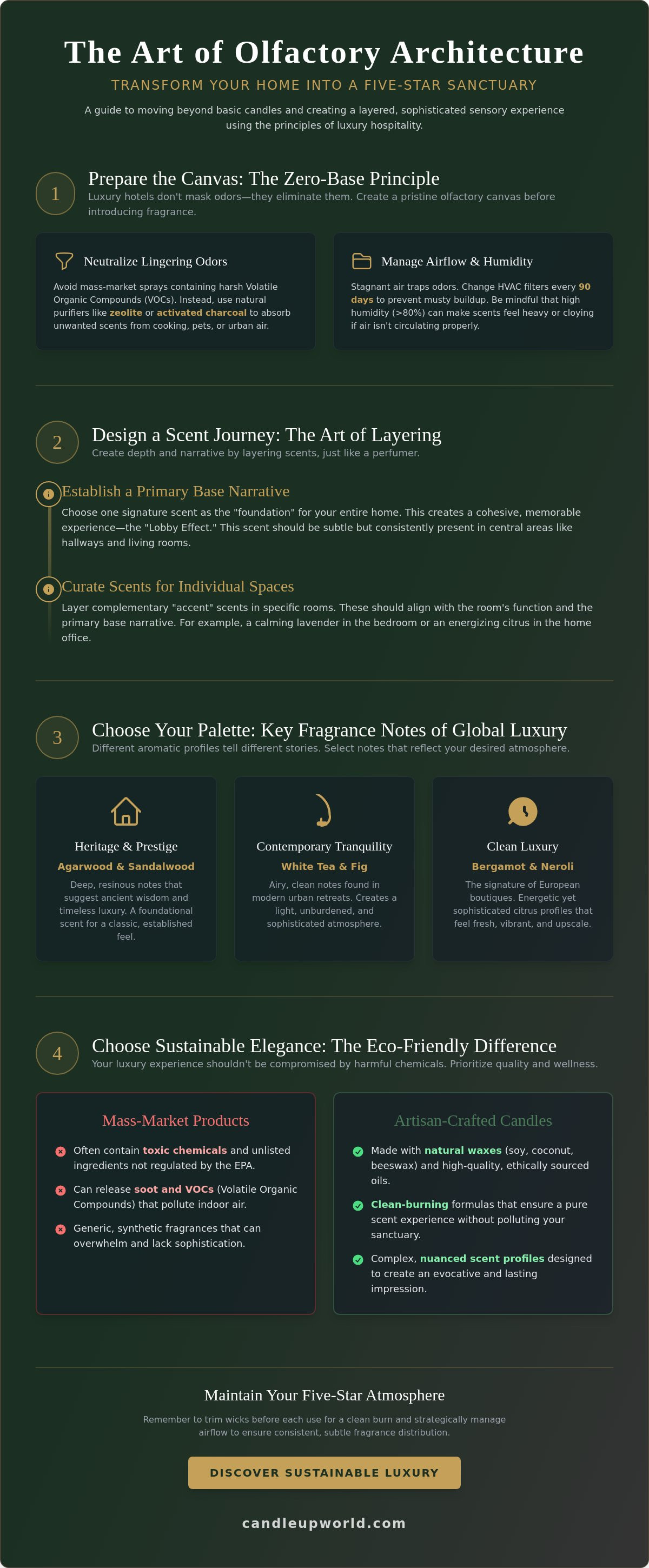
- Agarwood and Sandalwood: These deep, resinous notes act as a foundation for heritage and prestige. They suggest a sense of ancient wisdom and timeless luxury.
- White Tea and Fig: These provide an airy, contemporary tranquility. They're often found in modern urban retreats where the goal is to feel light and unburdened.
- Bergamot and Neroli: The "clean luxury" signature of European boutiques. These citrus-based profiles feel energetic yet sophisticated.
Preparing the Canvas: Neutralizing and Airflow Management
Before you light a single wick, you must embrace the Zero-Base principle. Five-star institutions don't mask odors; they eliminate them to create a pristine olfactory canvas. You can't achieve a sophisticated atmosphere by layering premium notes over yesterday's cooking or urban smog. This preparation is the secret behind Scent Branding in Luxury Hotels, where the environment is meticulously scrubbed of competing aromas to let the signature narrative shine. If you're learning how to make your home smell like a luxury hotel, your first step isn't purchase; it's purification.
Humidity plays a massive role in how fragrance behaves. In tropical climates like Hong Kong or Singapore, where humidity often exceeds 80%, scent molecules can feel heavy or cloying if the air is stagnant. It's tempting to reach for a mass-market room spray, but these often contain volatile organic compounds (VOCs). With New Jersey's updated regulations taking effect on August 18, 2026, the industry is finally moving away from these harsh chemicals. Instead, use natural neutralizers like zeolite or activated charcoal to strip away impurities. This ensures your tranquil home fragrance remains untainted by chemical interference.
Eliminating Urban Odor Interference
Living in a high-rise apartment often means battling "city smell," a mix of exhaust and industrial air that seeps through windows. Your air conditioning system is often the culprit for circulating stale scents. Change your filters every 90 days to prevent a musty buildup. Deep cleaning your textiles is equally vital. Curtains, rugs, and upholstery act as scent sponges, holding onto 80% of household odors. Steam cleaning these surfaces twice a year provides the neutral foundation required for a lasting hotel aroma.
Optimizing Your Space for Scent Flow
Every home has "scent dead zones," typically corners or hallways where air becomes trapped. To master how to make your home smell like a luxury hotel, you must use natural convection. Place your primary scent source near a gentle airflow source, like a cracked window or a low-speed fan, but avoid direct drafts that dissipate the fragrance too quickly.
- The Scent Gateway: Your entryway is your most important zone. It's the "handshake" of your home that establishes the Lobby Effect immediately.
- Zonal Transitions: Use the natural movement of people through the house to carry scent from the living area into more intimate spaces.
- Vertical Placement: Fragrance molecules rise. Placing your candles or diffusers at waist height allows the scent to bloom as it moves upward.
A Step-by-Step Guide to Luxury Scent Layering
Once your space is purified, you can begin the creative process of layering. This is the heart of how to make your home smell like a luxury hotel. It requires a strategic approach that mirrors the way a curator assembles an art gallery. You aren't just lighting a candle; you're composing a sensory narrative that guides people through your home. This intentionality is what separates a truly premium environment from one that simply uses air fresheners.
Step 1 is selecting your "Base Narrative." This is a singular, sophisticated scent that acts as the foundational thread for your entire living space. It should be light and airy, perhaps a soft white tea or a subtle citrus, ensuring a cohesive transition between rooms. Step 2 involves assigning "Sub-Narratives" to specific zones. While the base stays constant, each room can have a distinct accent that reflects its specific function. For deeper insights into selecting these profiles, explore The Art of Luxury Home Fragrance.
Step 3 focuses on the delivery method. Use reed diffusers for constant, background scenting in transitional areas like hallways or entryways. Reserve artisanal candles for active zones where the ritual of lighting the flame adds to the ambiance. Finally, Step 4 is the "Occasion Layer." This is a temporary boost of intensity, such as an extra spray or a larger multi-wick candle, used specifically when hosting guests or during a personal evening ritual to elevate the mood.
Room-by-Room Olfactory Curation
The living room demands a "Cultural Curator" vibe. Opt for sophisticated woods, resins, or agarwood to suggest heritage and worldliness. In the bedroom, the goal is to create a "Sensory Sanctuary." Use tranquil lavender, soft musks, or light sandalwood to signal to the brain that it's time to rest. For the dining room, avoid heavy florals that interfere with the palate. Instead, choose herbal notes like rosemary or soft gourmand scents like vanilla bean to complement the culinary experience without overpowering it.
Mastering the Intensity Balance
Balance is critical to maintaining a five-star feel. For a 1,000 sq ft apartment, lighting more than two medium-sized candles simultaneously can overwhelm the senses and diminish the luxury effect. The "Golden Ratio" for reed diffusers is typically one 200ml vessel for every 250 sq ft of space. Timing is also part of the craft. Light your candles 30 minutes before guests arrive to allow the scent to bloom, then extinguish them once the room reaches peak fragrance to let the notes linger naturally in the air.
Choosing Sustainable Elegance: The Eco-Friendly Difference
True luxury is never just about the surface; it's about the integrity of the materials used to build the experience. While you're researching how to make your home smell like a luxury hotel, you'll find that the world's most prestigious hospitality brands are moving away from synthetic aerosols toward sustainable, botanical formulations. They've realized that a sophisticated atmosphere is hollow if it compromises the air quality of the guests. The shift toward eco-luxury isn't just a trend; it's a commitment to a refined tranquility that respects both the resident and the environment.
The most significant hurdle to achieving a premium aroma is the use of paraffin wax. Derived from petroleum, paraffin releases soot and volatile compounds that can stain walls and irritate the lungs. A five-star experience shouldn't come with a side of toxins. Instead, the foundation of a clean, premium burn lies in high-quality soy wax and lead-free cotton wicks. These materials ensure that the fragrance remains pure and the vessel stays pristine. To understand the science behind these sustainable choices, read The Ultimate Guide to Luxury Ecofriendly Candles.
The Artisanal Value of Sustainable Materials
There's a palpable sensory difference between a synthetic fragrance and one crafted from botanical essential oils. Synthetics often feel flat and one-dimensional. In contrast, artisanal, small-batch production allows for a scent complexity that evolves over time; it reveals top, heart, and base notes just like a fine perfume. This meticulous attention to detail is why our products feel like curated pieces of art. Our Dual-Purpose promise further elevates this value. Once the wax has vanished, the vessel, which is often adorned with luxury signifiers like 24-carat gold, becomes a cultural artifact or a piece of sophisticated drinkware for your home.
Creating a Non-Toxic Sanctuary
Mass-market room sprays frequently hide phthalates and parabens under the vague label of "fragrance." These chemicals are known endocrine disruptors, making them far from ideal for an intimate living space. For urban residents, where air quality is already a concern, creating a non-toxic sanctuary is vital. This is why we prioritize our signature Tranquil scents, using only eco-friendly ingredients that meet the strict August 18, 2026, VOC standards. By choosing products that respect these benchmarks, you ensure your home remains a safe, healthy retreat. Explore our curated collection of eco-luxury scents to find the perfect anchor for your space.
Meticulous Curation: Maintaining the Five-Star Atmosphere
Creating a signature scent is a creative triumph, but maintaining it is a ritual of discipline. The world's most iconic hotels don't just set a fragrance and forget it; they employ staff to ensure every olfactory detail remains perfect. Learning how to make your home smell like a luxury hotel means adopting this same level of meticulous care. It's the difference between a fading aroma and a consistent sensory legacy that greets you every time you cross the threshold. This ongoing curation ensures your home remains a tranquil retreat rather than a space with "ordinary" lingering odors.
The foundation of this maintenance is the "Meticulous Care" ritual. To preserve the integrity of your artisanal candles, you must trim the wicks to exactly 6mm before every light. This simple act prevents soot from clouding your luxury vessels and ensures a clean, even burn. Equally vital is preventing tunneling; always allow the wax pool to reach the very edge of the container during every burn session. For a deeper dive into these preservation techniques, consult The Meticulous Candle Care Guide. By treating your candles with this level of respect, you honor the craftsmanship behind the scent.
As we move through 2026, luxury lifestyle trends are shifting toward "found luxury" and deeper sensory sanctuaries. Your home fragrance should evolve with the seasons to reflect this contemporary aesthetic. Shifting from airy white teas in the summer to deep, resinous agarwoods in the winter keeps your environment feeling intentional and fresh. You can explore these evolving styles in our guide to Luxury Home Decor Trends 2026. This seasonal rotation ensures your olfactory architecture never feels stagnant or dated.
Preserving Olfactory Integrity
Scent molecules are delicate and prone to evaporation if not handled correctly. Store your candles in a cool, dark place away from direct sunlight to keep the botanical oils from degrading. The "First Burn" is the most critical; it sets the wax memory for the life of the candle. For reed diffusers, consistency is key. Flip your reeds every two weeks to refresh the scent throw, and replace the entire unit every 3 to 4 months. Stale oil loses its complexity, resulting in a flat aroma that lacks the sophisticated "Lobby Effect" you've worked to create.
Adapting to the HK and SG Lifestyle
In high-humidity tropical environments like Hong Kong and Singapore, air can become heavy and stagnant, which traps odors. To master how to make your home smell like a luxury hotel in these climates, focus on "Tranquil" signatures that cut through the humidity. Scents with bergamot, eucalyptus, or crisp cedarwood work best in modern Asian architecture and minimalist spaces. They provide a sharp, clean contrast to the urban stress outside. Use these notes to create a sensory barrier that protects your peace, ensuring your home remains a worldly, artisanal sanctuary regardless of the city's chaos.
The Thoughtful Host Checklist:
- Neutralize the "Zero-Base" 2 hours before guests arrive.
- Light your primary "Base Narrative" candle 45 minutes prior to the event.
- Flip the reeds in your entryway diffuser for an immediate first impression.
- Extinguish the flame once the room reaches peak fragrance to let the notes linger naturally.
Transform Your Atmosphere Into a Living Legacy
Your journey into olfactory architecture is just beginning. By mastering the "Zero-Base" principle and the art of zonal layering, you've moved beyond simple fragrance into the realm of true sensory design. You now understand that a home's soul is defined by the invisible threads of scent that guide every movement and mood. Mastering how to make your home smell like a luxury hotel is an ongoing journey of sensory discovery that requires the finest artisanal materials.
Founded by a French expat in Hong Kong, Candle Up brings a unique blend of global luxury and local soul to your doorstep. Our collection features meticulously crafted candles adorned with 24-carat gold and infused with premium agarwood. We prioritize sustainable, eco-friendly ingredients to ensure your sanctuary remains a healthy, toxic-free retreat. Every vessel is a cultural artifact designed to be repurposed; it continues its legacy in your home long after the final burn.
Explore the Candle Up Collection and curate your own five-star sanctuary.
Embrace the ritual of tranquility and let your home tell a story of refined elegance.
Frequently Asked Questions
What scent do luxury hotels use for their lobby?
Luxury hotels typically use bespoke signature blends rather than single notes to create a unique brand identity. Common profiles include white tea for airy, contemporary spaces or sandalwood and agarwood for heritage properties. These scents are designed to trigger immediate relaxation through the "Lobby Effect." By choosing a complex, artisanal fragrance, you replicate the meticulous olfactory architecture found in five-star branding.
How can I make my house smell like a hotel without a diffuser?
You can achieve this effect by using artisanal candles or high-quality room mists. Artisanal candles are the most effective alternative because the heat from the flame helps the botanical oils bloom and travel throughout the space. If you're wondering how to make your home smell like a luxury hotel without electronic diffusers, focus on strategic placement. Place a candle in your entryway or near a gentle airflow source to establish an immediate sense of tranquility.
Are hotel-inspired fragrance oils safe for pets and children?
Safety depends entirely on the specific ingredients used in the formulation. Mass-market oils often contain phthalates and parabens that are harmful to pets and children when inhaled over long periods. However, luxury eco-friendly products that meet the August 18, 2026, New Jersey VOC standards are generally safer for families. Always look for lead-free wicks and soy wax bases to ensure your sanctuary remains a non-toxic environment.
How long does a luxury candle scent last in a large room?
A premium candle with a high fragrance load typically scents a 500 sq ft room for 4 to 6 hours after the flame is extinguished. The longevity of the aroma depends on the quality of the botanical oils and the success of the "First Burn" ritual. If you follow meticulous care guidelines, a single 200g artisanal candle will provide a consistent sensory experience for approximately 45 to 50 total burn hours.
What is the best way to layer different home fragrances?
The most effective method is the "Base Narrative" approach. Establish one subtle, overarching scent for the entire house, such as a light citrus or white tea. Then, add room-specific accents like deep woods in the study or tranquil lavender in the bedroom. This creates a layered, sophisticated transition that mirrors the sensory branding used in global boutique hotels, ensuring the fragrance never feels overwhelming.
Why does my home smell different even after using luxury candles?
Your home likely has lingering odors trapped in textiles, which can absorb up to 80% of household smells. If you haven't followed the "Zero-Base" principle of deep cleaning upholstery and rugs, the luxury scent will clash with these hidden odors. Ensure your air conditioning filters are changed every 90 days to prevent stale air from circulating and distorting your premium fragrance narrative.
Can I make my own hotel-inspired room spray at home?
You can create a simple mist, but it rarely matches the complexity of a professional artisanal blend. Homemade sprays usually lack the structured top, heart, and base notes found in global luxury products. If you choose to experiment, use 10% high-grade essential oils mixed with distilled water and witch hazel. However, for a true hotel atmosphere, small-batch curated products offer a more sophisticated and lasting experience.
How do I choose a signature scent for my specific home style?
Match your fragrance family to the emotional style of your interior design. Minimalist, modern spaces pair beautifully with bergamot or fig to maintain an airy, contemporary feel. If your home features rich textures and historical accents, choose agarwood or sandalwood for a sense of heritage. This alignment creates a cohesive sensory sanctuary where the scent feels like a natural extension of your decor.


